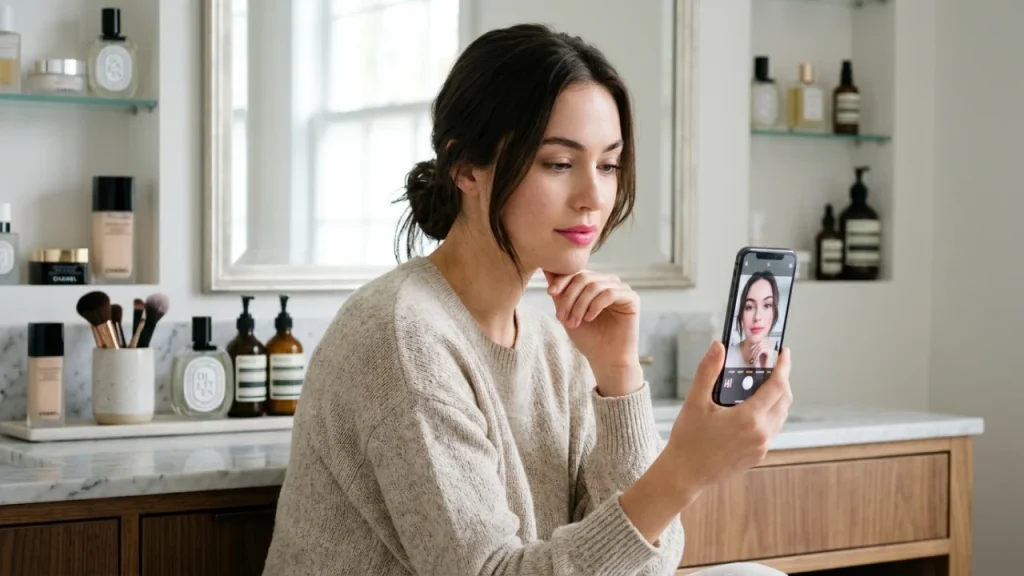
What is Virtual Makeup and Why Does It Matter Today
From Paper Catalogs to Digital Magic Mirrors
Shopping for beauty products used to mean looking at static photos in a thick paper book. These paper catalogs arrived in the mail every month. You saw a model wearing a bright red lipstick or a blue eye shadow. You had to guess if those colors would look good on your own skin. There was no way to try the product before you spent your money. This made shopping a risky game. Many people bought items they never actually used. The colors in the pictures often looked very different from the real product.
Later, people moved from catalogs to physical stores. You walked to a beauty counter in a large mall. You saw rows of glass bottles and shiny tubes. Salespeople offered to help you choose a look. You could use a tester to see the color on your hand or face. However, this method had many problems. Testers were often messy and unorganized. Hundreds of other people touched the same samples every day. This raised concerns about germs and skin health. It also took a lot of time to travel to the store and wait for help.
Technology changed everything with the arrival of digital mirrors. Now, your smartphone acts like a window into a new world. This is where virtual makeup comes into play. You do not need to put any physical cream or powder on your skin. You just look at your camera screen. The software finds your eyes, lips, and cheeks instantly. It places digital colors over your face in real time. It looks exactly like you are wearing the product. This tool allows you to see hundreds of different looks in just a few seconds.
Digital tools offer many benefits over paper or old stores:
- You can try new colors at home while wearing your pajamas.
- There are no messy tissues or dirty brushes to clean up.
- You see the result on your own face instead of a model in a book.
- You can change your mind a dozen times without washing your face.
- You can share a digital photo of the look with friends to get their opinion.
This transition makes beauty accessible to everyone. You no longer need a big budget or a trip to the city to find the right look. The move from paper to digital mirrors is a huge leap forward. It takes the guesswork out of shopping and turns a chore into a fun game. People feel more confident when they know exactly how a product looks. This shift is not just about fun. It is about making smart choices and feeling good about your appearance. Now that we know how we got here, we can look at how these tools help people manage their busy lives.
Why More People Use Virtual Makeup to Save Time
Traditional makeup shopping takes a lot of time. You have to drive to a store. You search for a parking spot. You walk through a large mall. Then you find the beauty counter. This process can take over an hour before you even touch a product. Virtual makeup changes this entire experience. Now, you can try on products from your couch. You do not need to leave your home. This saves hours of travel every week. It turns a long trip into a quick tap on a screen.
Testing real makeup is also a slow and messy process. You put a color on your skin. You look at it in a mirror. Then you must use a wet wipe to remove it. Your skin might get red or sore after trying five different colors. This physical pain makes people stop testing too early. They might pick the wrong shade because they are tired of wiping their face. With virtual makeup, there is no mess. You click a button and the color appears on your screen. You click again and it is gone. You can try fifty shades in the time it takes to wipe off one real lipstick.
Speed is the biggest benefit of these digital tools. In a store, you often wait for a worker to help you. They have to find the tester bottles. Sometimes the testers are empty or dirty. Digital mirrors are always ready for you. They never run out of product. You can compare a red lip to a pink lip in one second. This fast pace helps you see what looks best without any delay.
There are many ways this technology saves you time: – You do not have to travel to a physical store. – You avoid waiting in long lines at the checkout. – You do not need to wash your face between every look. – You get instant results on your phone or computer. – You can shop at any hour, even late at night.
Saving time also means making better choices. When you are in a rush at a store, you might buy the first thing you see. Later, you realize the color does not fit your style. Then you have to go back to the store to return the item. This wastes even more of your day. Digital tools let you test products whenever you have a free minute. You can try a new look during a short break at work. You feel sure about your choice before you spend any money. This efficiency makes the shopping journey smooth and stress-free. Choosing the right look is now about fun, not about how much time you have left in your day.
How Smart Technology Makes Virtual Makeup Look Real
How Your Phone Camera Tracks Your Face Features
Your phone camera does not see a face the same way a human does. It sees thousands of tiny dots of light called pixels. To apply virtual makeup, the software must turn these dots into a mathematical map. This process happens in a fraction of a second every time you look at the screen. The software looks for patterns of light and dark to find the general shape of a head. For example, your eyes are usually darker than your forehead. Your nose creates a shadow that the camera can recognize. These clues help the computer find your face in the frame.
Once the camera finds a face, it places digital landmarks on the image. Think of these landmarks as invisible stickers placed on your skin. A typical system uses between 60 and 100 of these points to build a guide. These points do not stay still. They move as you move. The software assigns specific points to different parts of your face:
- The inner and outer corners of each eye.
- The bridge and the very tip of the nose.
- The outline of the upper and lower lips.
- The arch and ends of the eyebrows.
- The curve of the jaw from one ear to the other.
These dots create a digital mesh. This mesh is like a 3D mask that fits perfectly over your features. The computer uses math to calculate the distance between these points. It learns the curve of your cheekbones and the width of your chin. Because the mesh is three-dimensional, the virtual makeup stays on your face even if you turn your head. It does not just sit on top of the screen like a flat sticker. It wraps around your features.
The software pays special attention to the edges of your features. For lipstick, it must find the exact line where your lips meet your skin. If the tracking is off by even a tiny bit, the makeup looks fake. The camera checks the contrast in color to find this edge. For eyeliner, it tracks the curve of the eyelid. It even accounts for the way your skin folds when you blink. This high level of detail makes the experience feel natural.
Modern phones are powerful enough to do this work many times per second. This speed is called the frame rate. If the camera tracks your face 30 times every second, the makeup will never lag. You can talk, laugh, or tilt your head. The digital products follow your movements without any delay. This speed is what makes the digital mirror feel like a real mirror. Accurate tracking is the first step in making the digital world feel real. However, the software still needs to make the colors look right under different lights.
Seeing True Colors with Better Lighting and Sharp Detail
Light is the most important part of seeing color correctly. A red dress looks bright in the sun but dark in a low-light hallway. Your phone camera must understand these changes to make virtual makeup look real. When you open a beauty app, the camera immediately measures the light in your room. It looks for “white balance” to make sure your skin does not look too blue or too orange. If your room has warm, yellow lamps, the software adjusts the digital colors. This prevents the makeup from looking like a flat, fake sticker on your face.
Modern software uses a trick called high dynamic range. This helps the screen show bright spots and dark shadows at the same time. Imagine you are wearing a shiny lip gloss. In real life, you would see tiny white spots where the light hits your lips. These are called highlights. Virtual makeup uses math to place these highlights in the right spots. If you move your head, the highlights move too. This makes the digital product look three-dimensional and wet, just like real gloss.
The colors on your screen come from millions of tiny dots called pixels. Each pixel is made of red, green, and blue parts. In the past, screens could only show a small number of colors. Today, high-quality screens can show billions of different shades. This allows the app to match the exact pigment of a real lipstick or eye shadow. If a product has a tiny hint of purple or gold, the screen can now display it accurately.
Sharpness also helps the digital image look like a real mirror. High-definition cameras capture the tiny details of your skin, like pores and fine lines. The software does not just cover these details with a solid block of color. Instead, it blends the digital makeup into your skin texture. This creates a look that is soft and natural rather than thick and blurry.
- Digital tools check the color of the light in your room first.
- The screen uses millions of pixels to show deep and rich colors.
- Software adds shine and shadows to give the makeup a realistic shape.
- High resolution keeps the image from looking like a cartoon.
When all these parts work together, the result is a perfect match. You can trust that the color you see on the screen is the color you will get in a real box. This high level of accuracy makes digital tools feel like magic mirrors. It gives users the confidence to try new styles without ever touching a physical brush. Accurate lighting and sharp details are the final steps in making the digital world feel as real as the physical one.
Why Trying On Makeup Online Helps You Find the Perfect Color
Testing Hundreds of Lipsticks in Just a Few Seconds
Testing a single lipstick in a physical store takes about two minutes when you include the time to apply it and wipe it off. If you want to try twenty colors, you will spend nearly an hour standing at a counter. Most people find that their skin becomes red and irritated after rubbing it with tissues just a few times. This physical pain often stops shoppers from finding the shade that actually looks best on them. They settle for a “good enough” color because their lips are too sore to continue.
Digital tools solve this problem by removing the need for physical contact. When you use virtual makeup, you can test a new shade every second. The software uses the camera on your phone or computer to track your face in real time. It identifies the exact borders of your lips and places a digital layer of color over them. This layer moves perfectly when you smile, laugh, or turn your head. You can see yourself in a bright coral and then a deep berry with one quick swipe of your finger.
This speed allows for a much wider range of experimentation. Most people stick to the same two or three colors for years because they are afraid to try something bold. With a digital mirror, there is no risk and no mess. You can explore colors you never thought would suit you. – You can try a dark purple shade just to see how it looks. – You can compare five different tones of red in less than thirty seconds. – You can switch between a shiny finish and a flat matte finish instantly. – You can see how a color looks under bright office lights or soft evening lights.
The technology also keeps your skin healthy. You do not have to worry about the germs found on shared store testers. Since the process is digital, it is perfectly clean. You save your skin from the friction of paper towels and harsh makeup removers. This means your face stays fresh, and you stay happy while you shop.
Trying on products this way gives you more confidence in your final choice. You no longer have to guess how a product will look once you get it home. You have already seen it on your own face in dozens of different ways. This efficiency makes the shopping process fun instead of a chore. Finding the right lip color is just the beginning of the digital beauty journey. The next step is making sure your entire face looks smooth and even with the right foundation.
Finding the Best Foundation Shade Without Using Messy Samples
Finding the right foundation is one of the hardest parts of a beauty routine. Our skin is not just one flat color. It has many layers and tiny hints of pink, yellow, or blue. Most people struggle to find a shade that looks natural. In the past, you had to go to a store and put small drops of liquid on your skin. This process was often messy and did not always work.
Store lights are a big reason why foundation shopping is hard. These lights are often very bright or have a yellow tint. They make every bottle look different than it does in natural sunlight. Most shoppers rub a small drop of product on their hand or wrist to test it. However, your hand is usually a different color than your face. This leads to many people buying the wrong product and wasting money.
The rise of virtual makeup has changed this experience for everyone. Your phone camera now acts like a high-tech scanner for your face. When you use a digital tool, it looks at millions of pixels on your skin. The software calculates your exact skin depth and identifies your undertones. These undertones are the colors that live beneath the surface of your skin.
- Cool undertones usually need a foundation with a hint of pink.
- Warm undertones look best with gold or yellow shades.
- Neutral undertones are a mix of both and need a balanced color.
AI tools can see these tiny details better than the human eye can in a dark store. The software compares your face to thousands of other skin tones in a large database. This helps the computer find a match that blends perfectly into your neck and jawline.
Hygiene is another major benefit of using digital tools. Physical testers in a store are touched by hundreds of different people every week. These open bottles can hold bacteria, oils, and dirt. Putting these samples on your face can cause breakouts or skin irritation. Using a digital mirror keeps your skin safe and clean. You do not have to put any liquid on your face to see if a color works for you.
Foundation also changes color after it sits on the skin for a few minutes. This happens because the oils in your skin react with the air. This process is called oxidation. It can make a light foundation turn orange or dark after you leave the store. Digital tools can predict how a shade will look once it settles. This means your perfect match stays the same color all day long.
Using digital tools is also much faster than the old way. You can try on thirty different shades of foundation in less than one minute. In a physical store, you would have to wash your face many times to try that many colors. Washing your face over and over makes the skin red and sore. Digital tools let you compare many brands and shades side by side without any mess or pain. This technology makes it easy to find a product that looks like your real skin. Finding the right base for your makeup is now a matter of science rather than luck.
Building Confidence Through Creative Freedom in Your Own Home
Experimenting with Bold Styles Without Any Fear
Trying a bright blue lipstick in a crowded store feels risky to many people. Most shoppers worry about what others think while they stand at a public counter. They also fear wasting money on a product that looks bad once they get home. Virtual makeup removes these barriers by creating a private space for creative play. You can test a neon green eyeliner or a deep purple blush with one tap on your phone screen. There is no salesperson watching you and no crowd to judge your choices.
In your own home, you have total privacy. This privacy allows your brain to relax and explore new ideas. When you are not afraid of making a mistake, you become more creative. You might try a sharp cat-eye look or a heavy contour for the first time. If the look does not fit your style, you do not need to scrub your skin with harsh soaps. You simply swipe to the next color or turn off the digital filter. This instant reset makes experimentation feel like a fun game instead of a stressful task.
Traditional makeup application takes a lot of time and effort. Trying ten different lipsticks in a store would leave your lips sore and stained. Digital tools allow you to try fifty different colors in just a few minutes. This speed changes how you think about your own face. You can see yourself in styles you never thought would work for you.
- Try bold colors that you usually avoid in the store.
- Test heavy styles meant for night events while sitting in your pajamas.
- Match makeup colors to digital clothing filters to see a full look.
- See how famous trends look on your specific face shape without the mess.
Seeing yourself in a bold look helps your brain get used to the new image. Experts call this process habituation. If you see yourself with bright red lips ten times on a screen, you stop feeling shocked by the change. The look starts to feel normal and even exciting. Eventually, you feel brave enough to wear that red lipstick to a real party or a work meeting. The digital mirror acts as a safe practice run for your real life.
This freedom to fail without any cost builds a new kind of inner strength. You learn that your face is a canvas for art, not just something to hide. By removing the fear of judgment, virtual makeup gives you the power to find your true style. Once you feel comfortable with how you look on screen, you are ready to master the physical tools to recreate that look.
How Virtual Tools Help You Learn New Makeup Skills
Digital mirrors use advanced sensors to map the unique shape of every human face. This technology does more than just show a reflection. It acts like a personal teacher that stays in your home. Many people struggle to know where to put their blush or how to draw a straight line with eyeliner. Virtual tools solve this problem by showing exactly where these products should go on your specific skin.
The software tracks over sixty points on the face to ensure the fit is perfect. When you use virtual makeup, the program can highlight your cheekbones or the arch of your eyebrows. This visual guide removes the guessing game. You no longer have to look at a generic chart in a magazine. Instead, you see a custom map of your own features. This helps you understand your face shape better than ever before. You learn the distance between your eyes and the height of your forehead.
Learning a new skill usually involves a lot of mess and wasted product. Digital tools allow you to practice the same motion dozens of times without using a single drop of liquid. You can follow on-screen prompts that show you how to blend colors. Some tools even use arrows to show the direction your brush should move. This builds muscle memory in your hands. When you finally pick up a real brush, your brain already knows the path it needs to take. This makes virtual makeup a powerful tool for anyone who feels stuck in their old routine.
These digital guides offer several ways to improve your daily routine: – They show you how different lighting changes the look of your skin. – They teach you how to layer colors without making the makeup look heavy. – They provide a safe space to try complex styles like a smoky eye. – They help you find the right spot for contouring based on your bone structure. – They allow you to pause and restart a look as many times as you need.
Lighting is another big part of the learning process. Most bathrooms have yellow or dim lights that hide mistakes. Virtual tools can simulate bright sunlight or soft evening lamps. This teaches you how much product you actually need for different settings. You learn that a look for a dark room needs more pigment than a look for a sunny day. Seeing these changes in real time helps you avoid common mistakes.
Confidence grows when you have a clear plan. Digital mirrors turn a confusing process into a series of simple steps. You start to see makeup as a craft rather than a mystery. This shift in mindset is the most important part of the journey. Once you master the basics through a screen, applying physical products feels natural and easy. You become the expert of your own face. This newfound skill sets the stage for even more creative choices in your beauty routine.
The Future of Beauty Shopping Without Leaving Your House
Personalized Beauty Advice from Your Digital Mirror
Digital mirrors now use high-definition cameras to track more than 60 different points on your face at once. This technology is much more advanced than a simple camera on a phone. It creates a 3D map of your unique features. This map allows the software to understand the distance between your eyes and the height of your cheekbones. It also looks at the texture of your skin and the exact shade of your complexion. Because everyone has a different face, this data helps the mirror give advice that is meant only for you.
In the past, you had to guess which colors would look good on your skin. You might spend money on a product only to find out it looks different at home than it did in the store. A digital mirror solves this problem by using virtual makeup to show you the results instantly. The software analyzes your skin undertones to see if they are warm or cool. It then suggests specific shades that will make your eyes look brighter or your skin look smoother. This process takes the guesswork out of shopping.
The mirror acts like a professional makeup artist who is available at any time. It does not just show you colors. It also teaches you how to use them. The software can highlight specific areas of your face on the screen. It might show you exactly where to put a shadow to define your jawline. It can show you where to add light to make your face look more awake. This personalized guidance helps you learn new skills while you try on different looks.
Modern digital mirrors collect several types of data to help you:
- Your exact skin tone under different lighting conditions.
- The shape of your eyes and how much space is on your eyelids.
- Areas where your skin might be dry or oily.
- Which colors you have liked or disliked in the past.
This level of detail makes virtual makeup feel real and helpful. The software learns from your choices over time. If you often choose soft pinks, the mirror will start to find new versions of that color for you to try. It can even suggest products based on the weather or the time of day. For example, it might suggest a bolder look for a night out or a lighter look for a sunny morning.
Shopping this way is faster and cleaner than visiting a physical store. You do not have to wash your face multiple times to try on ten different lipsticks. You simply swipe your finger and see the change in the mirror. This technology makes beauty advice accessible to everyone. You no longer need to pay for an expensive consultation to get expert tips. Your mirror provides all the information you need to feel confident in your choices. This move toward digital tools is changing how we think about our daily routines. It makes the process of finding new products fun and easy. The next step in this journey will look at how the technology itself is getting even better.
What to Expect from the Next Generation of Virtual Makeup
Digital cameras can now track over 100 specific points on your human face at the same time. This high-speed tracking is the secret behind the next generation of virtual makeup. Older apps often look like a flat sticker placed over your photo. New technology changes this by mapping the unique curves of your bone structure. It understands the depth of your cheeks and the fold of your eyelids. This means the digital color moves perfectly when you smile or blink. It stays stuck to your skin instead of floating in the air.
Lighting is the next big hurdle that scientists are solving. Most people test products in a bathroom with bright white bulbs. However, they might wear that makeup to a dim restaurant or a sunny park. Future digital mirrors will let you toggle between different light settings. The software calculates how light rays bounce off specific pigments. If you choose a glittery eyeshadow, the screen will show individual sparkles catching the light as you turn your head. This helps you see the true finish of a product before you spend any money.
We are also moving toward “smart textures” in these digital tools. Standard virtual makeup usually just changes the color of your skin. The next version will simulate the actual physical properties of the liquid or powder. You will see how a thick cream fills in a pore or how a light tint lets your freckles show through. This level of detail helps people with different skin types. For example, someone with dry skin can see if a foundation looks flaky in the simulation.
The next generation of shopping will include these advanced features:
- Environmental matching: The mirror adjusts your look based on the weather or time of day in your city.
- Wear-time simulation: A slider allows you to see how the product looks after ten hours of wear.
- Guided application: Digital lines appear on the screen to show you exactly where to place your contour.
- Texture zoom: High-definition views show you the exact grain of a powder or the shine of a gloss.
These updates make the digital experience feel more like a real store visit. You no longer have to guess if a shade will work for you. The computer does the hard work of calculating the physics of beauty. This technology removes the risk of buying the wrong item. It turns your smartphone into a professional studio that fits in your pocket. Shopping becomes a fast and fun experiment rather than a stressful choice. This shift ensures that everyone can achieve professional results at home.