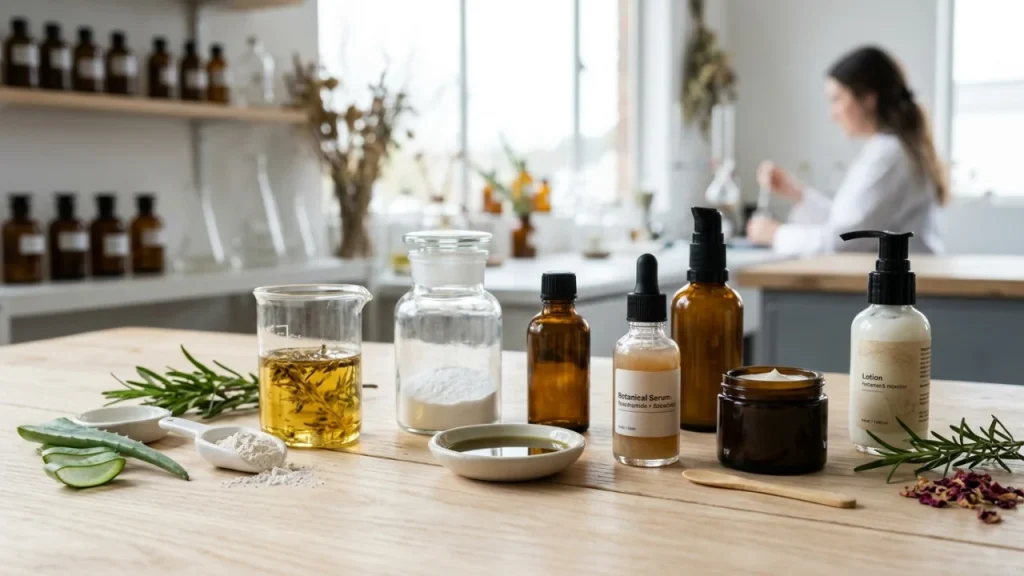
Why Modern Cosmetic Ingredients are Moving from the Garden to the Lab
Understanding Lab-Grown Cosmetic Ingredients and How They Work
Scientists can now build skin-identical molecules inside a clean laboratory. These lab-grown cosmetic ingredients are not fake versions of nature. Instead, they are high-tech copies of the best parts of plants and human
The Limits of Traditional Plant Extracts in Beauty Products
Plants are living things that change every day based on the weather. A rose grown in a rainy valley will have different chemicals than a rose grown on a dry hill. This makes it hard to create reliable cosmetic ingredients
How Peptides and Postbiotics Change Your Skin at a Molecular Level
Peptides: Small Protein Chains with Big Results for Aging Skin
Peptides are short chains of amino acids that act as messengers for your skin cells. Think of them as tiny notes or specific instructions sent to your body. These cosmetic ingredients tell your cells to perform important tasks like building new protein. The most vital protein for young-looking skin is collagen. Collagen keeps your face firm and prevents it from sagging or wrinkling. As we get older, our bodies naturally produce less of this protein every year. Peptides step in to give the skin a helpful nudge to keep working. They do not just sit on the surface like heavy oils or waxes. Instead, they interact with the skin at a molecular level to trigger real repair from the inside out.
When collagen breaks down naturally, it creates small protein pieces. Your skin detects these pieces and thinks it has a new injury. It then starts making more collagen to fix the perceived damage. Peptides used in modern skincare mimic these broken pieces perfectly. When you apply them, your skin believes it needs to repair itself right away. This clever trick helps reduce the look of fine lines and deep wrinkles over time. It is a smart way to use biology to improve skin health without using harsh chemicals. Lab-grown peptides are often more effective than old botanical extracts. Scientists can design them to be very precise so they target one specific skin problem.
There are several types of peptides that help the skin in different ways: – Signal peptides tell cells to produce more structural proteins like elastin. – Carrier peptides deliver vital minerals to the skin to help it heal faster. – Enzyme inhibitor peptides slow down the natural process that destroys collagen. – Neurotransmitter peptides help relax the skin to smooth out expression lines.
Creating these molecules in a lab ensures they are pure and stable. Natural plant extracts can change depending on the weather or the soil where the plant grew. Lab-grown actives are exactly the same in every single bottle you buy. This consistency is why they are so popular in high-performance products today. By using these messengers, you give your skin the instructions it needs to stay strong and healthy. This molecular communication is a major step forward in beauty science. Understanding how these signals work helps us see why the skin barrier also needs its own special care.
Postbiotics: The Secret to a Healthy and Balanced Skin Barrier
Postbiotics are the powerful chemical leftovers that good bacteria leave behind. Unlike probiotics, postbiotics are not living things. They are the molecular tools that bacteria use to keep your skin healthy. Scientists can now create these specific molecules in a controlled lab. This allows them to make pure and effective cosmetic ingredients. These lab-grown versions work better because they stay stable on a shelf for a long time. They do not need special care to stay active like live bacteria do.
Your skin has a natural shield called the skin barrier. This shield keeps moisture inside your body and keeps bad germs out. Postbiotics help this shield stay strong and thick. They act like a tiny repair crew for your skin cells. When your barrier is weak, your skin gets red, dry, and itchy. Postbiotics fix these gaps by helping your skin make more natural fats. These fats act like glue that holds your skin cells together. A tight seal prevents water from escaping into the air.
There are many ways these molecules help your face: – They balance the acid levels on your skin surface to stop bad germs. – They stop harmful bacteria from growing and causing painful breakouts. – They send signals to your skin to stay calm and stop being red. – They help your skin recover from damage caused by the sun or wind.
Postbiotics are perfect for people with sensitive skin. They do not cause the irritation that some harsh chemicals might trigger. Instead, they work with your body to create a peaceful environment. By using these molecular tools, you can keep your skin barrier balanced and tough. This protection is the first step to keeping your skin looking smooth and fresh every day. Strong skin is better at fighting the signs of aging.
Why Molecular Stabilization Makes Cosmetic Ingredients More Effective
Keeping Powerful Actives Fresh and Strong Inside the Bottle
Many active cosmetic ingredients lose half of their power within weeks of opening a bottle. This happens because air, light, and heat attack the delicate molecules inside the jar. Think of a sliced apple turning brown on
How Stabilization Helps Ingredients Reach Deeper Skin Layers
Your skin acts like a strong wall to protect your body. It keeps germs out and moisture in. This wall makes it hard for cosmetic ingredients to do their job. Most active molecules are too large to fit through the tiny gaps in the skin surface. They often get stuck on the top layer where they cannot fix deep issues. Scientists use molecular stabilization to solve this problem. They wrap active ingredients in tiny bubbles called liposomes. These bubbles are made of the same fats found in your skin cells. This trick helps the skin recognize the ingredient as a friend. The skin lets the bubble pass through the outer layers. Once inside, the bubble breaks open to release the active parts.
Stabilization also changes how molecules react with water and oil. Some ingredients love water but the skin barrier is oily. These two do not mix well. Lab-grown actives can be modified to bridge this gap. This process ensures the ingredients reach the living cells deep down. Without this help, many expensive creams just sit on top of the skin. They might feel nice, but they do not change how the skin works. High-performance actives need a clear path to the target area.
- Encapsulation protects the ingredient from breaking down too fast.
- Smaller molecule sizes allow for better movement through pores.
- Special coatings help the ingredient blend with skin oils.
- Time-release technology lets the active work for many hours.
Peptides are a great example of this technology. Peptides are small chains of proteins that tell your skin to make more collagen. However, peptides are fragile. They can break apart the moment they touch the skin surface. Stabilization keeps these chains whole until they reach the right spot. This is why lab-grown actives often work better than raw plant extracts. The lab version is built to survive the journey. It does not just sit there; it travels to where the real work happens. This deep reach is what creates visible results over time. Modern science makes sure the most powerful tools do not go to waste. This precision is the key to modern skincare.
The Safety Benefits of 100% Pure Lab-Created Actives
Removing Pollutants and Irritants from Your Skin Care Routine
Plants grown in soil act like sponges. They soak up whatever is in the ground around them. This often includes harmful chemicals like pesticides and heavy metals. When companies make traditional extracts, these toxins can end up in your skincare. Lab-created actives solve this problem by growing in a sterile environment. Scientists control every single part of the process. There is no dirt, no acid rain, and no bugs. This means the final cosmetic ingredients are 100% pure from the start.
Nature is beautiful, but it can be messy. Soil often contains traces of lead or arsenic from old factories or nearby farms. Plants do not know these things are bad for humans. They pull them into their roots and stems. Even organic plants can have issues with air pollution or contaminated water. In a lab, there is no air pollution. Every liquid and gas used is filtered and checked. You get the powerful part of the plant without the hidden dangers.
Here are the main pollutants you avoid with lab-grown actives: – Toxic heavy metals like mercury or lead. – Harsh chemical pesticides used to kill insects. – Mold and bacteria that grow in damp fields. – Pollen and other natural allergens.
Using cleaner cosmetic ingredients means your skin is less likely to react poorly. You do not have to worry about hidden irritants causing redness or itching. Pure actives work better because your skin does not have to fight off toxins at the same time. This purity leads directly to the next big benefit: getting the same high-quality results every single time you open a new bottle.
Consistent Results Every Time You Use a High-Performance Product
- Your 152. skin 153. barrier 154. stays 155. calm 156. because 157. it 158. knows 159. what 160. to 161. expect. (12)
- – 163. You 164. see 165. faster 166. results
Why Lab-Grown Cosmetic Ingredients are Better for Our Planet
Saving Water and Land with Modern Bio-Technology
Traditional farming for beauty products consumes huge amounts of fresh water. To get one small bottle of rose oil, farmers must grow thousands of flowers. These plants need large fields and constant watering for many months. Lab-grown methods change this process completely. Scientists now use large stainless steel tanks called bioreactors to grow specific cosmetic ingredients. These tanks work like small, controlled ecosystems. They do not need rain or soil to produce high-quality actives.
Making ingredients in a lab is much better for the Earth for several reasons: – Lab tanks use up to 99 percent less land than traditional farms. – Water stays inside a closed system and can be reused many times. – No pesticides or chemicals leak into the local groundwater. – Plants do not have to fight against bugs or bad weather.
Using less land is a major win for nature. When we grow cosmetic ingredients in a lab, we do not have to clear forests for new fields. This leaves more room for wild animals and natural forests to thrive. Traditional farming also relies on the seasons. A drought can ruin a whole crop of lavender or chamomile. In a lab, the environment is perfect every single day. This means we get the same high-quality results without wasting precious natural resources. We can produce more skin care actives in a single room than a farmer can grow on many acres. This efficiency helps protect our planet for the future. Saving land and water is just the first step in making beauty more sustainable. High-tech labs also help solve the problem of pollution caused by moving goods around the world.
Reducing the Carbon Footprint of Global Beauty Products
Traditional farming for beauty products creates a massive amount of carbon dioxide. Farmers must use heavy tractors to plant and harvest crops. These machines burn fossil fuels all day long. Then, workers must ship the raw plants
Comparing Lab-Grown Actives to Legacy Botanical Products
Why Lab Actives Work Faster on Wrinkles and Dark Spots
Lab-grown molecules are up to ten times more concentrated than standard plant extracts. Traditional plant oils are complex mixtures. They contain many parts of a plant like stems, leaves, and water. Only a tiny part of that mixture actually helps your skin. Lab-grown actives are different because they are pure. This purity allows them to reach the deeper layers of your skin much faster.
Take wrinkles as a clear example. Lab-made peptides act like tiny keys. They fit into specific locks on your skin cells. These keys tell the cells to make more collagen right away. A regular plant oil cannot send this signal as quickly. It often sits on the surface of the skin instead of sending a message to the cells. Lab actives work with your natural biology to fix lines.
Dark spots also need this type of precise care. Lab-grown molecules can stop the skin from making too much pigment. They target the exact enzyme that causes brown spots. Many botanical products are too weak for this task. They are diluted by other plant parts that do not help with color. When you use lab-made cosmetic ingredients, you get a higher dose of what actually works.
Lab actives win the race for several reasons: – They have a smaller size to go deeper into the skin. – They are stable and do not lose their power in the jar. – They stay at the same strength in every single bottle. – They do not contain extra plant waste that can cause redness.
You can see changes in your skin in weeks instead of months. This speed makes lab actives a better choice for fixing signs of aging. Fast results for wrinkles and spots are just the beginning of what science can do. Modern technology also changes how we keep the skin moist and healthy.
Better Hydration Through Science-Backed Moisture Molecules
Lab-made molecules can hold up to one thousand times their weight in water. Traditional plant oils often stay on the surface of the skin. They act like a lid on a jar. They stop water from leaving, but they do not always add water back in. Modern cosmetic ingredients made in a lab work differently. Scientists can change the size of these molecules to make them more effective. Small molecules travel deep into the skin layers to hydrate from within. Large molecules stay on top to smooth the surface and protect the skin.
- Lab actives stay stable and effective for a longer time.
- They do not contain extra plant parts that might cause itchy skin or allergies.
- Scientists test them to make sure they reach the right cells.
- These molecules work with the skin’s own natural moisture system.
- They provide a steady supply of water throughout the day.
Think of a sponge. A natural plant extract might be like a wet leaf. It feels damp for a minute, but the water soon evaporates. A lab-grown moisture molecule is like a high-tech sponge. It grabs water from the air and pulls it into your skin. This keeps your face looking plump and fresh all day long. These tools are much more reliable than raw extracts. Nature is random, but science is precise. Every drop of a lab active has the exact same power to hydrate. This precision helps people with very dry skin find relief that lasts. When you use these advanced tools, your skin stays bouncy. It does not just look wet on the outside. It feels healthy from the inside out. This deep moisture is the secret to a glowing face that lasts from morning until night. Simple plant waters cannot match this level of deep, lasting performance.
The Science of Purity: How Scientists Ensure High Performance
The Role of Clinical Breakthroughs in Modern Beauty Science
Scientists now use medical tools to create better skin care. These lab-grown actives are not just simple liquids. They are the result of years of clinical research. In the past, people used crushed plants to treat their
Testing for Purity in a Controlled Lab Environment
Scientists in a lab work in rooms that are cleaner than a hospital operating room. These spaces are called cleanrooms. They use special air filters to catch every piece of invisible dust. This level of care is vital for making modern cosmetic ingredients. When scientists grow peptides or postbiotics, they must keep out all outside germs. Even one tiny microbe can ruin a whole batch of high-performance actives.
In nature, plants grow in soil. Soil often contains heavy metals, pesticides, and wild bacteria. It is hard to remove these things completely during the extraction process. In a lab, scientists start with a blank slate. They control the water, the air, and the food the cells eat. This ensures that the final product is the same every single time.
To check for purity, scientists use several strict steps: – They test the raw materials for any hidden toxins before the process begins. – They use machines to scan the molecular weight of the active parts. – They check for microbes that could cause skin irritation or infections. – They verify that the active part of the ingredient is strong enough to do its job.
One common tool is a machine that separates parts of a liquid. It shows if there are any unwanted chemicals hiding in the mix. If the machine finds even a tiny bit of the wrong thing, the whole batch is tossed out. This strict testing means the user gets a safe product without the risks of nature. Lab-grown actives provide a level of safety that traditional extracts cannot match. This precision is what allows lab-made actives to work so well on sensitive skin.
Choosing the Best Cosmetic Ingredients for Your Future Skin Routine
What to Look for on the Label of Next-Generation Products
A single peptide molecule can trigger a chain reaction that tells your skin to produce more collagen. This is why reading a label is about more than just finding plant names. Modern skincare labels list ingredients by their scientific names rather
The Next Generation of High-Performance Skin Care Solutions
Scientists now grow powerful skin-saving molecules in clean labs instead of harvesting them from wild forests. This shift marks a new era for cosmetic ingredients. In the past, we relied on crushed plants or oils. These natural